Acute surgical abdomen due to biliperitoneum secondary to safe laparoscopic cholescysteotomy
DOI:
https://doi.org/10.51252/rsayb.v5i1.1228Keywords:
laparoscopic cholecystectomy, surgical complications, duct of Luschka, bile leakAbstract
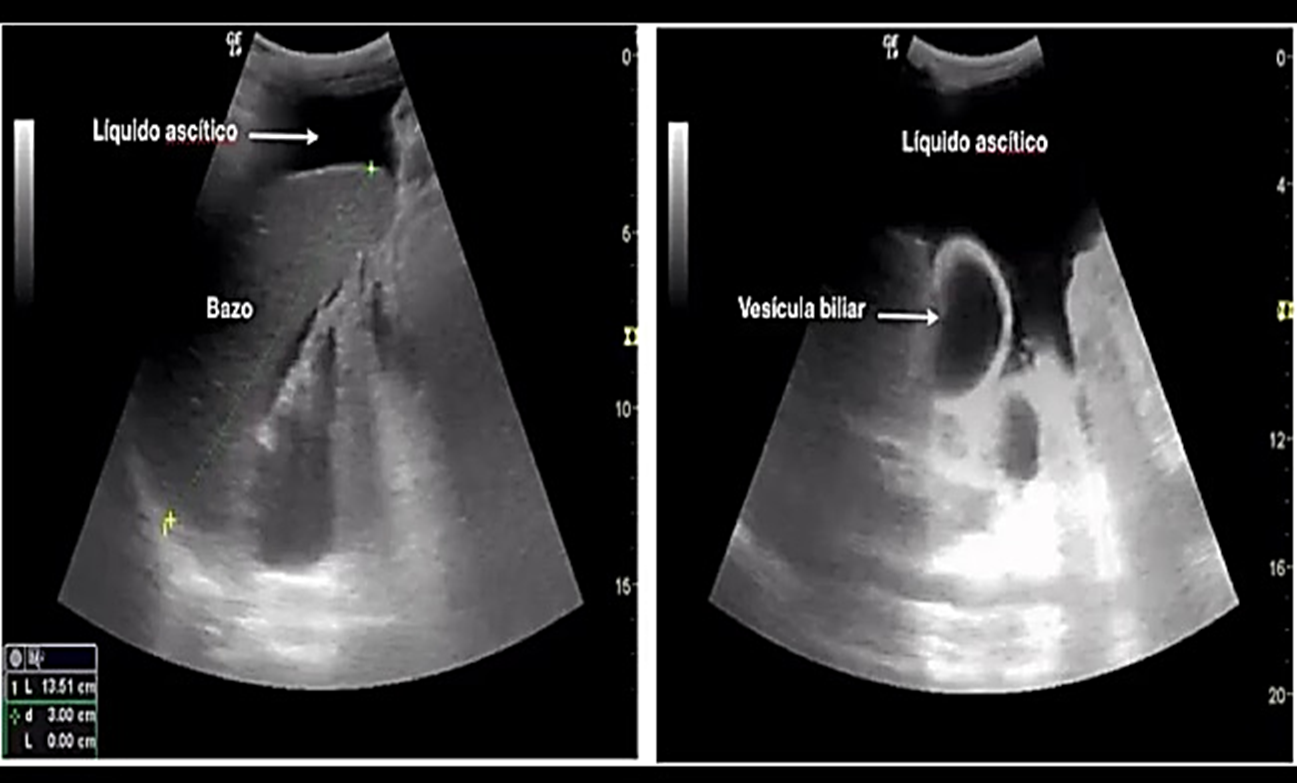
Introduction: Laparoscopic cholecystectomy removes the gallbladder by severing the cystic duct and artery and dissecting it from the liver bed; if the Luschka duct is not identified and is injured or left open, it can cause bile leakage into the abdominal cavity. Objective: To describe the surgical approach to acute abdomen due to biliperitoneum secondary to laparoscopic cholecystectomy. Clinical Case: A 47-year-old woman with asthma and incidental gallstones underwent elective laparoscopic cholecystectomy. At 18 hours, she presented with severe abdominal pain, diaphoresis, and peritoneal irritation, and ultrasound showed free fluid. Exploratory laparotomy was performed, revealing an active bile leak through the Luschka duct between segments IVB and V. This was treated with lavage using 3000 cc of 0.9% normal saline, passive drainage, and follow-up, with complete resolution within 48 hours without further procedures. Conclusion: Bile leakage from the duct of Luschka, although uncommon after laparoscopic cholecystectomy, may go unnoticed and become serious if not diagnosed and treated in a timely manner; early detection and prompt management allow for complete recovery.
Downloads
References
Aceves-Quintero C, Padilla-Pérez F, Martínez-Ceballos E, Kuri-Osorio J. Fuga de conducto biliar accesorio como complicación de colecistectomía laparoscópica. Presentación de dos casos. Rev Mex Cir Endoscop. 2022; 23(3-4): 89-93. En: https://www.medigraphic.com/pdfs/endosco/ce-2022/ce223f.pdf
Vincenzi P, Mocchegiani F, Nicolini D, Benedetti Cacciaguerra A, Gaudenzi D, Vivarelli M. Bile Duct Injuries after Cholecystectomy: An Individual Patient Data Systematic Review. J. Clin. Med. 2024; 13, 4837. En: https://doi.org/10.3390/jcm13164837
Strasberg SM. Avoidance of biliary injury during laparoscopic cholecystectomy. J Hepatobiliary Pancreat Surg. 2002; 9(5): 543-7. En: https://pubmed.ncbi.nlm.nih.gov/12541037/
Vitiello A, Spagnuolo M, Persico M, Peltrini R, Berardi G, Calabrese P. et al. Biliary Leak from Ducts of Luschka: Systematic Review of the Literature. Surgeries. 2024; 5(1): 63–72. En: https://doi.org/10.3390/surgeries5010008
Cañete Gómez J, Álamo Martínez JM, Martín Jiménez C, Muñoz Ortega A, Valera Sánchez Z. Biloma secundario a traumatismo hepático. Cirugía Española. 2009; 85(6): 379–380. En: https://dialnet.unirioja.es/servlet/articulo?codigo=3005207
Jarufe CN, Rebolledo AR, Llanos LO, Gámez DB, Buckel SE, Guzmán BS. Lesiones de vía biliar postcolecistectomía: conducta terapéutica actual. Rev Cir. 2022; 74(4): 432-437. En: https://www.scielo.cl/pdf/revistacirugia/v74n4/2452-4549-revistacirugia-74-04-0432.pdf
Altamirano-Castañeda M, Blancas-Valencia J, Flores Colón I, Paz-Flores V, Blanco-Velasco G, Hernández Mondragón O. Resultados del tratamiento endoscópico en fugas biliares. Experiencia del Centro Médico Nacional Siglo XXI IMSS. Endoscopia. 2016; 28(2): 55-60. En: https://www.elsevier.es/es-revista-endoscopia-335-pdf-S0188989316300239
Downloads
Published
How to Cite
Issue
Section
License
Copyright (c) 2026 Milena Prada, Jorge Bittar, Hugo Reyes, Luis Traviezo-Valles

This work is licensed under a Creative Commons Attribution 4.0 International License.
The authors retain their rights:
a. The authors retain their trademark and patent rights, as well as any process or procedure described in the article.
b. The authors retain the right to share, copy, distribute, execute and publicly communicate the article published in the Revista Salud Amazónica y Bienestar (RSAYB) (for example, place it in an institutional repository or publish it in a book), with an acknowledgment of its initial publication in the RSAYB.
c. Authors retain the right to make a subsequent publication of their work, to use the article or any part of it (for example: a compilation of their works, notes for conferences, thesis, or for a book), provided that they indicate the source of publication (authors of the work, journal, volume, number and date).