Characterization of Turbidity Reduction in Caplina River Water Using Papaya Seeds as a Natural Coagulating Agent
DOI:
https://doi.org/10.51252/reacae.v5i2.1442Keywords:
Water, Carica papaya, natural coagulant, water quality, turbidityAbstract
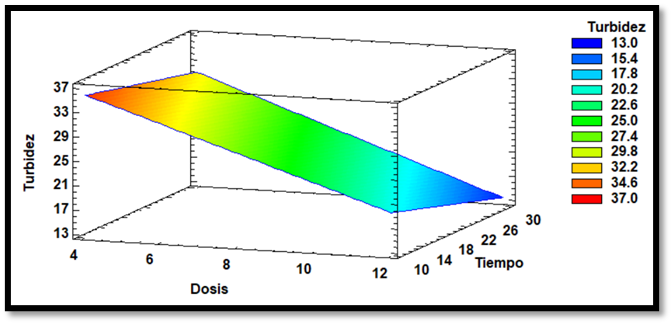
The objective of this study was to evaluate the efficiency of a natural coagulant obtained from Carica papaya L. seeds in reducing the turbidity of water from the Caplina River under different doses and sedimentation times. Water was collected from a representative point in the river, and a natural coagulant was prepared from washed, dried, and ground seeds. Three doses (4 ml, 8 ml, and 12 ml) were applied, combined with sedimentation times of 10, 20, and 30 minutes, resulting in nine trials conducted using a procedure adapted from the jar method. Turbidity was measured before and after treatment using a calibrated nephelometer. The raw water had an initial value of 124.53 NTU, indicating a high presence of suspended particles. The best results were obtained with the 12 ml dose and longer sedimentation times, achieving an 89% reduction and a final value of 13.7 NTU. Intermediate doses showed stable performance, while lower doses resulted in moderate reductions. In conclusion, Carica papaya L. seeds demonstrated significant efficiency and are positioned as a viable, economical, and environmentally friendly alternative for clarifying turbid water.
Downloads
References
Amran, A. H., Zaidi, N. S., Syafiuddin, A., Zhan, L. Z., Bahrodin, M. B., Mehmood, M. A., & Boopathy, R. (2021). Potential of Carica papaya Seed-Derived Bio-Coagulant to Remove Turbidity from Polluted Water Assessed through Experimental and Modeling-Based Study. Applied Sciences, 11(12), 5715. https://doi.org/10.3390/app11125715
Aziz, A., Agamuthu, P., Hassan, A., Auta, H. S., & Fauziah, S. H. (2021). Green coagulant from Dillenia indica for removal of bis(2-ethylhexyl) phthalate and phenol, 4,4’-(1-methylethylidene)bis- from landfill leachate. Environmental Technology & Innovation, 24, 102061. https://doi.org/10.1016/j.eti.2021.102061
Benalia, A., Derbal, K., Amrouci, Z., Baatache, O., Khalfaoui, A., & Pizzi, A. (2024). Application of Plant-Based Coagulants and Their Mechanisms in Water Treatment: A Review. Journal of Renewable Materials, 12(4), 667–698. https://doi.org/10.32604/jrm.2024.048306
Cangela, G. L. C. de, & Benetti, A. D. (2018). Otimização da clarificação de águas turvas com sementes de Moringa oleifera. Revista DAE, 66(212), 5–15. https://doi.org/10.4322/dae.2018.019
Choy, S. Y., Prasad, K. M. N., Wu, T. Y., Raghunandan, M. E., & Ramanan, R. N. (2014). Utilization of plant-based natural coagulants as future alternatives towards sustainable water clarification. Journal of Environmental Sciences, 26(11), 2178–2189. https://doi.org/10.1016/j.jes.2014.09.024
Feria Díaz, J. J., Bermúdez Roa, S., & Estrada Tordecilla, A. M. (2014). Eficiencia de la semilla Moringa Oleífera como coagulante natural para la remoción de la turbidez del río Sinú. Producción + Limpia, 9(1), 9–22. https://doi.org/10.22507/pml.v9n1a1
Freitas, T. K. F. S., Almeida, C. A., Manholer, D. D., Geraldino, H. C. L., de Souza, M. T. F., & Garcia, J. C. (2018). Review of Utilization Plant-Based Coagulants as Alternatives to Textile Wastewater Treatment (pp. 27–79). https://doi.org/10.1007/978-981-10-4780-0_2
Gaikwad, V. T., & Munavalli, G. R. (2019). Turbidity removal by conventional and ballasted coagulation with natural coagulants. Applied Water Science, 9(5), 130. https://doi.org/10.1007/s13201-019-1009-6
Hoa, N. T., & Hue, C. T. (2018). Enhanced water treatment by Moringa oleifera seeds extract as the bio-coagulant: role of the extraction method. Journal of Water Supply: Research and Technology-Aqua. https://doi.org/10.2166/aqua.2018.070
Jung, Y., Jung, Y., Kwon, M., Kye, H., Abrha, Y. W., & Kang, J.-W. (2018). Evaluation of Moringa oleifera seed extract by extraction time: effect on coagulation efficiency and extract characteristic. Journal of Water and Health, 16(6), 904–913. https://doi.org/10.2166/wh.2018.078
Manholer, D. D., de Souza, M. T. F., Ambrosio, E., Freitas, T. K. F. de S., Geraldino, H. C. L., & Garcia, J. C. (2019). Coagulation/flocculation of textile effluent using a natural coagulant extracted from Dillenia indica. Water Science and Technology, 80(5), 979–988. https://doi.org/10.2166/wst.2019.342
Rianos, K., Meza Leones, M. C., & Mercado Martinez, I. D. (2019). Clarification of the water of wetlands using a mixture of natural coagulants. DYNA, 86(209), 73–78. https://doi.org/10.15446/dyna.v86n209.73687
Romero Seminario, J. M. (2024). Eficiencia del coagulante de la semilla de papaya en la disminución de turbidez en el tratamiento de agua para consumo humano [Universidad Nacional del Centro del Perú]. http://hdl.handle.net/20.500.12894/10867
Unnisa, S. A., & Bi, S. Z. (2018). Carica papaya seeds effectiveness as coagulant and solar disinfection in removal of turbidity and coliforms. Applied Water Science, 8(6), 149. https://doi.org/10.1007/s13201-018-0791-x
Zyulaida, R. P., Puspitasari, Y. A., & Putra, R. S. (2025). Effectiveness of Papaya Seed Biocoagulant ( Carica papaya L. ) in Peat Water Treatment. E3S Web of Conferences, 655, 01017. https://doi.org/10.1051/e3sconf/202565501017
Downloads
Published
How to Cite
Issue
Section
License
Copyright (c) 2026 Nikol Medalit Guillermo-Jacobo

This work is licensed under a Creative Commons Attribution 4.0 International License.
The authors retain their rights:
a. The authors retain their trademark and patent rights, as well as any process or procedure described in the article.
b. The authors retain the right to share, copy, distribute, execute and publicly communicate the article published in the Revista Amazónica de Ciencias Ambientales y Ecológicas (REACAE) (for example, place it in an institutional repository or publish it in a book), with an acknowledgment of its initial publication in the REACAE.
c. Authors retain the right to make a subsequent publication of their work, to use the article or any part of it (for example: a compilation of their works, notes for conferences, thesis, or for a book), provided that they indicate the source of publication (authors of the work, journal, volume, number and date).